Where are we? What day is it? During this time of isolation and near house arrest, my usually melancholic mind bobs in a devilishly polluted rip tide of doom, finding no solace in the things that once held hope. The Wuhan, China, or COVID 19 virus is at present wreaking havoc on the world. And yet, and yet, if I just turn away. . .
I have pulled out a novel - albeit eight pages long - which I began years ago and abandoned, not having the heart to carry it through. And yet, suddenly, in this time of fear and war-without-bombs, I find that the dialog now speaks in accents I had not heard before. The situation feels more real. The characters have heightened impact on the place where the Muse lives, above the tides, above the shore, looking into Beyond at the place of Story.
To keep busy I make lame attempts at keeping dog hair off the floors. I try to finish art projects. I like being alone, but now, it's not easy. For you who are extroverts and really suffer from the isolation, I send you sympathy. For me, I'd rather sit in a closet and write a story, or in a room with a chair and a good book, but what I miss is normalcy. It is hard to go against the grain when all that is normal has vanished. Aren't you writing? I hear from friends.
This has happened to me before. When being stationed in remote Northern Arizona with nothing but me and the dog and the dust in trailer battered by sixty mile-an-hour winds with gusts to eighty on most days, while my husband worked his job seven days a week, I couldn't write. I couldn't think. I wandered the hills and looked at plants, picked up pretty rocks to line my windowsills, mostly feeling alone. And then something happened. It wasn't good. Waiting for a biopsy report is the longest wait this side of pregnancy. But it roused my Muse and informed her that time was precious, and life was meant to live, and there are things you could say.
I know not everyone is given to writing. And not all writing needs to be a novel. Or even a memoir. However, for all of us, there are things you could say.
It can be a form of catharsis to know you have left something, even so much as a recipe, with a note that your grandmother made this but with more vanilla, is still writing. Write a letter. If you have children, grandchildren, address it to them, but put it away to send some other day, or at the reading of your will. Better yet, write it to someone as yet unborn. Tell them of this day. Tell of yourself, and why you feel what you feel. Fears. Uncertainty. The lack of companionship, or if you are just so tired of not being able to have a piece of pie with a friend at a diner. The lack of human touch even for those dying. Write a letter to the future. Tell them what you know about your inner self, your questions, your hopes. It doesn't have to be long to be powerful. Put it away in a drawer, and add to it now and then. Leave your words on the Story of Our Time.
Graduating from high school or college is truly a once in a lifetime moment. Whether you ground your fingers pushing pencils and keyboard to make the dean's list or barely skated through, if you get there, it is an achievement of note.
The graduating classes of 2020 can call this the year when no one graduated. That milestone they've traveled toward seems to have been removed from the road. They've done the work; survived the romances, learned some tough lessons; they've sloughed off some classes, worked hard at others, been lazy and been courageous; they've tried to understand the complex world seen through the eyes of professors and text book authors, and even realized that those people didn't have the answers, either. Even for the students who have coasted through on some privilege they didn't earn, it was not a simple passage.
No matter what, you've been counting on this date. The dance, the senior trip, the all night bonfire, the special clothes, maybe a new car, a dinner alone with a special someone. You may have relatives coming, who must now cancel, because all of it is gone and there is no way to retrieve it in light of the onset of a rogue virus, a plague upon humanity, and the equally virulent panic in the public.
You're going to have to get creative. If you don't memorialize YOUR graduation as the event it is, you'll forever feel a tug of sadness when you speak of it. So get the dress, the suit, the car. Take the photos, plenty of them. Get the food, even if it is takeout, and use Face Time or Skype, and all the other social chat ways to connect and share the photos with your friends, compile graduation memories from your phones and cameras. Include your pets, your art projects, or back it up with a song you wrote. Make a memory recording better than the ones Facebook creates out of "your memories." Include your sports events, your dumb stunts, pics of relatives, too, and photos of your school from out front. If you can go on campus, get pics of your buildings, rooms, the cafeteria, the place your friends went for study. The library. The books. The chemistry lab. Nursing, Mechanical training, Biology. A math equation. Photograph a history paper, or a drawing, a teacher, a bicycle rack. While we are all quarantined, use your smarts to work the software to create a recorded experience of your years in school. Five photos are better than none. Thirty are better than five. Take selfies with your new hairstyle. Your creative nails. Your great new car or the rusty old pickup you plan to fix. Get those memories recorded and make it special. This is your passage, and one of these days, maybe not next year, but some year, you will be glad you have done it, I promise.
I have my memories, too, in my mind, but not in photo form, and how I WISH I HAD. Three years after I graduated, the school was remodeled and nothing familiar was left. There is no returning to anything; it is gone. That happened at my high school and college, too! In the years between graduation and the day you are ready to look back at those photos, you will change. You will see the world through such different eyes that you will remark in wonder at who you were and whom you have become.
You may not be able to have the events you expected to have, but you have lived your life, done the work, learned things you never thought you would know. You have the events you have already lived, not the ones that might have occurred on the dates set by the faculty or State for your school. This may be the year without a prom, but you can dance in your living room or backyard, and you, dear student, will still graduate, wear your cap and gown proudly, and you will have the most original, unique graduation experience because you get to create it yourself.
It has been a while since last I wrote something to you. In the meanwhile, do not think I have not been at work here in the cold mountains near Sunrise Ski Resort in Arizona.
Confusion is afoot. Having a common-ish name like Nancy Turner can lead to mix-ups, and has. I am not the Nancy J. Turner who writes micro-biology texts. Nor am I the Nancy Turner born in 1930, who wrote something called "Having Fun With It: The Man Hater's Project." (They have even included my bio and photograph!) I AM however, the Nancy E. Turner who wrote These Is My Words, attributed to Anne E. Turner on an old edition for sale on Amazon. Seriously, if you're going to pin my name to something, at least have it be a book with huge royalties!
Titles for my novels are something I spend months deciding. To me, they are the perfect, absolutely only possible, all encompassing name for the book into which I have spent two to three years of my heart's life and blood. Yet, titles are: 1) NOT COPYRIGHT-ABLE; and 2) certain to be changed by your publisher. Often that is a good thing, but sometimes not. There could be no other title for MY NAME IS RESOLUTE. It suits the story, the character, and the final sentence: "Let this . . . be a record, then, that once there lived a woman, and that her name was Resolute." That was not an accident. My novel, Sarah's Quilt began life as "A Season of Courage." When the editor told me it sounded like something that would have a Purple Heart medal on the cover, I remarked, "Any woman who lives long enough deserves one." The Star Garden, as well, was named "The Spirit Level," which refers to an old name for a carpenter's or builder's leveling tool. I was told it sounded too "Out on a Limb" by Shirley McClaine.
Until next time, signing off. This is Dan Brown, author of a few best sellers.
Wednesday, February 19, 2020
I'm asked fairly often whether I know this writer or that one. Do we meet together and discuss literature, and is there a quiet dark corner in a downtown bookstore where a ritual of absinthe mingles with old cigars, and the ghost of Hemingway appears now and then to gentle our hearts with his honest laughter?
Can I wish it were true and at the same time deny that I would take part? I miss meeting with other writers, talking books, ranting about small royalties and the paucity of true Literature in America where talent is lost in favor of thinly contrived novels crafted as a medium for gratuitous sexual scenes and social agendas.
If only I could again sit with the authors of the personally autographed books on my shelf of special collections. Shall I drop names? Shall I tell you of the time I had dinner with Clive Custler, and shared unbound manuscripts with Tony Hillerman? I've known Alice Hoffman, Lisa See, Kathleen Kent, Mary Sharratt and Michael Blake. I have spent delightful hours with Ofelia Zepeda, Jennifer Niven, Peggy Godfrey, Robert Morgan. Susan Cummings Miller and Marguerite Noble. Sandra Dallas. Luis Alberto Urrea, Ron Querry, and Sherri Szemon, Mary Doria Russell. Masha Hamilton, Jewell Parker Rhodes, Lillian Cantor and Sharon Kay Penman. David McCullough. Bonnie Marson. C. J. Box. Anne Hillerman. Jennifer Lee Carroll. Rebecca Eaton. H. W. Brands. The chances of them remembering me are, to put it kindly, slim, but I remember them all. I remember Ofelia's story of the tortillas her mother made in the hot summer, melting over a flaming comal, and saying, the smart kids knew to leave Mama alone until she rested. Clive Custler was in the middle of raising a Civil War ship from the bottom of the ocean, surely enough material for another novel. Mary Doria Russell can tell medical tales of dying by consumption and every moment of the life of Doc Holliday. Every time I sit to ponder another story, I call them all to me and offer a sip of their favorite, whether it's herbal tea or "papa's" whiskey. I also invite C.S. Lewis, Stephen King, Truman Capote, Anna Quindlen and Anne Taylor, Bernard Cornwell and Nathaniel Philbrick, Stephen Ambrose, Samuel Clemens, and Jane Austen, Jack London and Leo Tolstoy. Every First People's storyteller, every Norseman or Highlander who knelt by a crag to spin a yarn of heroes and war, every West Indian grandmother lulling her children's children to sleep.
We need each other, we crafters of tale. To separate is to toss a coal away from the fire where it cannot feed off the flame. Surrounded with books, my writing nook quivers with sylphic spirits of those past, and memories of those still here. Come and share my writing space. There is a chair. I've made cake. Chocolate this time, although it fell a bit in the center, but the crumb is good and moist and the white vanilla frosting has a touch of almond flavor as well. Before you put pen to paper or fingers to keyboard, think of the authors before you and all the thousands of stories left untold. . . waiting for you.
Nancy E. Turner discusses her latest novel, Light Changes Everything, highlighting how the history and setting of Arizona in the early 1900s played into her character creation and development.
There should be a plate on every non-fiction book stating Things are not what they seem. Digging for facts can be a rabbit run through a jungle of information, more than will ever come to light in a novel. No matter how much granite fact you find, a novel is the tip of the iceberg of research, yet it still doesn’t put a complexion on a face, a smell of the local mud, the soft squeak of saddle leather, nor the ache of longing in a human heart. In telling a fictional story which plays out upon a very real historical stage, another signpost should warn, Keep it real.
Key to my research is always being there, physically, in person. It’s imperative to know a swamp in New England is not the same swamp in Louisiana. The Arizona desert is not the Sahara, nor is it Death Valley, for Arizona teems with life. True, not all of that life is compatible with human life, as snakes, spiders, poisonous lizards, and scorpions own the place, while we are the interlopers. Likewise, the plants defend themselves with every kind of thorn, poison, and mold. In historical writing, the setting becomes more of a character than it is a backdrop. The terrain and the weather can keenly affect the actions of the fictional characters, especially in a place as vivid as Southern Arizona.
In my newest novel, the main character, Mary Pearl Prine, crosses the country by train from her home in the dry, cactus-covered land of Southern Arizona, leaving behind smell of creosote bush and clay burned under a harsh sun, to Illinois during late summer when the corn is ready to harvest and the air is laden with pollen. The rolling hills are damp with rain, and green, and trees grow huge in diameter and height. Crooked palo verde trees, stunted by drought and broken by wind are nowhere to be seen. In moving to Illinois the homey dust she’s known and never considered a hardship has been taken over by land that seems to grow anything, and yet the lush green is laid bare by November’s chill. Snow has a smell. If you’ve always been in it, you may not notice, but to this Southwestern author, Illinois’ snow has a smell, unlike Arizona snow.
For me to envision my character as a college student in Illinois took quite a stretch. Although there was a University in Tucson, it offered classes for men in mining or agriculture. Plus, because there were no high schools as we think of them, the average age of a student in 1907 was fourteen, and the “older” girls, meaning seventeen and above, had the task of helping the younger students with laundry. In the early days, there were more students in the preparatory department than in the University proper, and the number of University graduates was never more than ten a year. Wheaton College in Illinois was founded in 1834 as a female seminary and in 1906, it was the only institution of higher learning in this country to openly recruit female and African American students. It was coeducational, and among its earlier graduates are many notables.
Harold Lee Alden received a Bachelor of Arts from Wheaton College in 1912 and his master’s from the University of Chicago in 1913. After earning a PhD he worked for twenty years at the Yale Observatory in South Africa before returning to the University of Virginia. The crater Alden on the far side of the Moon is named in his honor.
Juanita Breckenridge Bates was an American Congregationalist minister. She was educated at Rock Island High School, and received a bachelor of science from Wheaton College. She was the first woman to be awarded a Bachelor of Divinity degree from Oberlin College Theological Seminary (1891). For decades, she was a staunch voice of the women’s suffrage movement.
The decade before being granted Statehood in 1912, Arizona was torn apart with tumult. Germany had been smuggling arms and soldiers across the border of Arizona into Mexico for years, getting ready to stage a vast attack on America at her southern border. All they had to do was overthrow the Mexican president, Porfirio Diaz, put their own man in his place, and they’d have us! However, the assassination of Diaz created a storm that could not be contained, which erupted by 1910 into the Mexican Revolution. Fully armed and with an alternate agenda, angry farmers took measures; Pancho Villa organized a gang.
When the German army left to return to their own country and start a war there, the political climate of Southern Arizona descended into utter chaos. Kidnapping was rampant as a way to finance trade, and bandits ruled every road, while the Arizona Rangers, hopelessly undermanned, tried to chase down criminals. If their trade was honest, every rancher north and south of the border did what they could by hiring gun hands along with cowhands. Justice was what you made it.
Arizonans knew of places “back east” where civilization seemed to have taken hold. Men believed statehood would bring law and order, courts, jails for murderers and cattle thieves – or perhaps a long drop on a short rope – but at least it would be done according to statute, with legal defense, with judges and juries. Many Arizona women of the era were not so sure. Only in the territories of Arizona and New Mexico was a woman still free under centuries-old Napoleonic/Mexican parish law, to own property, run a business, claim her own land, and be her own boss. Even though Arizona didn’t let women vote until 1920, it was statehood that confined her to the corset-wearing, quiet-voiced submissiveness expected of her Eastern sisters. My female characters had never known a world in which a woman couldn’t own a ranch and give orders to a man without deferring to a husband or guardian simply because he wore pants. For Mary Pearl to pack her pistols and take off to a “ladies’ seminary” in Wheaton, Illinois, was a step onto a strange world, and her confidence that she’d be a match for all challengers comes up against society from the first moment she steps off the train.
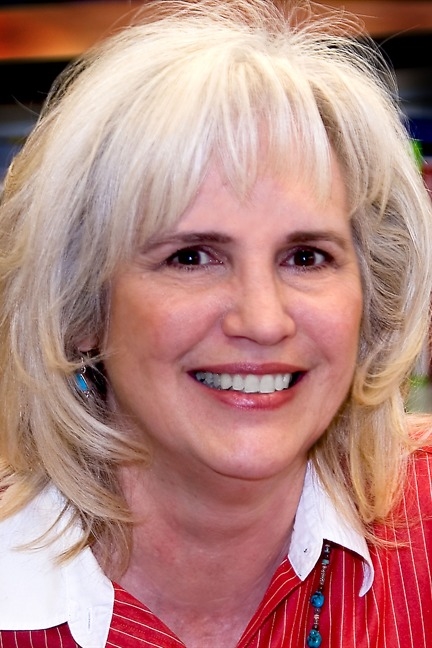
Nancy E. Turner was born in Dallas, Texas, and currently resides in Pinetop, Arizona with her husband, John. She started college when her children were full-grown. With a degree in fine arts from the University of Arizona with a triple major in creative writing, music, and studio art, Turner went on to become the bestselling author of many novels including These Is My Words, Sarah’s Quilt, and The Star Garden.
Wednesday, February 5, 2020
Writing tips for today. It is so hard to trust an editor, even one you're paying.
This is a photo of a raging forest fire taken from my yard. We were building our house, getting ready to finish framing when a huge fire broke out fifteen miles away; the wind was coming toward us. We had planned to cover the house with stained cedar planks shaped like half logs, to give the classic log cabin look. They were already ordered. But fire knows no pride, and insurance companies will not cover a house under construction unless you are a licensed contractor. DIYers get no leeway. Everything we owned and every cent we had accumulated in 46 years was standing tinder in the path of the fire. We cancelled the cedar and ordered fireproof concrete clapboards. Okay looking, but not a log cabin. Before it reached us, the fire was squelched by rain and a change in wind direction. Nothing was lost except some sleep. Wait. Four years later, it was indeed the right choice.
When you write your epistle to the universe, I mean when you really put aside the author inside you, the ego, and write hard enough to weep, hard enough to hurt, when you tap into your own soul and lay it upon a page for others to see, you risk everything. No insurance. No backup. Trusting only your inner voice, you press forward and keep on, with winds of doubt circling and the smoke of sure failure swirling toward your very heart. Then, an editor - either one you've hired or one at the publishing company - tells you if you'd just change x to a y, or add abc, it will stand. And you are crushed. You WANT it the way you planned it. But you, dear writer, are amidst the forest, and standing in the trees admiring the plot, you may not have an inkling something is really not going to hold up. Save the original, but make the changes. Build it with fireproof instead of glamour. Trust the advice, and then wait. Put it aside. Wait a couple of months, then read the new version. Read the original. You'll know.
Only twelve hours late, I finally have made it to my desk. As the dear Robbie Burns said so wisely, "The best laid schemes o' mice and men gang aft agley." I have been agley since yesterday, but never far from my mind was the post for this propitious day. Suffice it to say I am trying to figure out how to connect this new Blog to my new web page, www.nancyeturner.com , and having no luck at all.
One of the questions I am asked most often is a version of "where do you get your ideas?" and though I'm tempted to say, "there's this magic tree in my yard," I know it is a genuine question, sometimes asked by the most complementary readers. Here in a nutshell is the inspiration for the beginning of any novel.
"What if . . . ?" That's it. That's the whole answer. What if you lived back then? What if you'd never seen a tree that wasn't crooked and thorny, or a cornfield, or a grassy lawn, or a debutante ball, but you'd read about them and dreamed of lives lived in books and novels? What if everything you knew about the world did not apply once you stepped foot out of Territorial Arizona and into a more "civilized" part of the country? What if you found a ticket out?
Every character needs a complication, and Mary Pearl has many, but this one came to me almost by accident: What if a young lady was so stunningly beautiful that moving about in the real world became a hassle? Surrounded by family, she's confident, but in a world where her very face is a stumbling block to relationships, she is at wit's end all the time. It's a play on a character who is incredibly rich, and therefore doesn't trust anyone who wants to befriend them.
I found a photo of an actress from the early 1900's named Elsie Ferguson. It's not a glamour-riven name by any means, but her face! I could imagine that if a student in the same photography class as she were so smitten with her looks, and if he got too enthusiastic in his coloring so that he applied too much lip rouge and eye shadow, he could change the portrait and slander her character even if she were the most virtuous person at the school. This is the photo of Elsie Ferguson, who became the model and inspiration for Mary Pearl Prine, a girl whose face could break a heart or start a war, a Helen of Troy from Arizona, trying to learn painting and photography in an art class in Wheaton College. (Credit: "Klimbim" colorized the portrait.)
This novel has been one I wanted to write but faced many uphill battles in doing so. My husband suffered a traumatic brain injury two years ago, and life became challenging in ways I could never have imagined. My "what if" had never gone down that path. Our lives gang agley never to be the same. Time, the Veteran's Administration doctors, and friends old and new, helped us both find strength, healing, and light at the end of that terrible tunnel. In life as in photography, LIGHT CHANGES EVERYTHING.

 The chances of them remembering me are, to put it kindly, slim, but I remember them all. I remember Ofelia's story of the tortillas her mother made in the hot summer, melting over a flaming comal, and saying, the smart kids knew to leave Mama alone until she rested. Clive Custler was in the middle of raising a Civil War ship from the bottom of the ocean, surely enough material for another novel. Mary Doria Russell can tell medical tales of dying by consumption and every moment of the life of Doc Holliday. Every time I sit to ponder another story, I call them all to me and offer a sip of their favorite, whether it's herbal tea or "papa's" whiskey. I also invite C.S. Lewis, Stephen King, Truman Capote, Anna Quindlen and Anne Taylor, Bernard Cornwell and Nathaniel Philbrick, Stephen Ambrose, Samuel Clemens, and Jane Austen, Jack London and Leo Tolstoy. Every First People's storyteller, every Norseman or Highlander who knelt by a crag to spin a yarn of heroes and war, every West Indian grandmother lulling her children's children to sleep.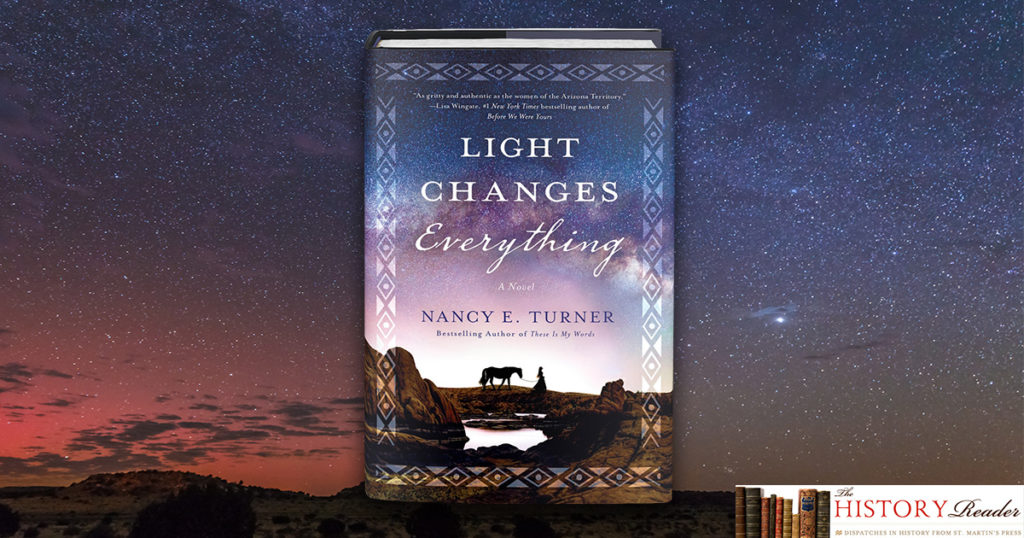


 Only twelve hours late, I finally have made it to my desk. As the dear Robbie Burns said so wisely, "The best laid schemes o' mice and men gang aft agley." I have been agley since yesterday, but never far from my mind was the post for this propitious day. Suffice it to say I am trying to figure out how to connect this new Blog to my new web page, www.nancyeturner.com , and having no luck at all.